I Found 7 Extra Minutes Each Night with This Smart Storage Trick—Here’s How
Ever feel like your evenings spiral out of control? You’re not alone. I used to rush through bedtime routines, stressed and scattered—until I reorganized my bedroom storage with a smart system. It didn’t just tidy up the clutter; it gave me back quiet moments I didn’t know I’d lost. Those extra minutes became space for reflection, better conversations, even deeper connections. Let me show you how a small tech-powered change created ripple effects far beyond my closet.
The Chaos Before: How My Evenings Fell Apart Without Me Noticing
For years, I thought my nighttime routine was just how life worked. You know the drill: come home after a long day, help with homework, tidy up the kitchen, fold laundry, and then—finally—collapse into bed. But instead of winding down, I’d spend 10 to 15 minutes just trying to get ready. Where were my favorite pajamas? Did I leave my phone charger in the living room again? Why was there a shoe in the bathroom? I’d open a drawer, get overwhelmed by tangled scarves and mismatched socks, and shut it in frustration. My bedroom wasn’t a sanctuary—it was a storage unit with a bed in it.
And here’s the thing no one talks about: that clutter wasn’t just physical. It was emotional. Every misplaced item, every open drawer, every pile of clothes on the chair—it added up to mental noise. I didn’t realize how much energy I was wasting until I stopped. That constant low-level stress, the nagging feeling that something was out of place, made it harder to relax. I’d lie in bed thinking, I should’ve put that away or I need to find that blouse for tomorrow. My mind was still working when my body was supposed to be resting.
I started to see a pattern. On nights when my space was calm, I fell asleep faster. On nights when it was messy, I tossed and turned. It wasn’t just about cleanliness—it was about peace. And I wasn’t alone. I mentioned this to a few friends over coffee, and their faces lit up. “Wait, that’s me!” one said. Another admitted she’d given up on her closet entirely and just wore whatever she could find. We were all accepting this chaos as normal. But what if it didn’t have to be?
Discovering Smart Storage: Not Just Shelves That Move
The idea of “smart storage” used to sound like something from a sci-fi movie. I pictured robotic arms pulling out my sweaters or a closet that talked to me. Honestly, I was skeptical. I didn’t want more gadgets—I wanted less mess. But then I visited my friend Lisa’s new apartment, and she showed me her bedroom setup. No robots, no flashing lights. Just a wardrobe with soft-close drawers that lit up when she reached for them, and a small panel on the wall that let her control the lighting with a tap or a voice command.
“I can find my workout clothes in the dark,” she said, laughing. “And I don’t have to remember where I put things. The system helps me remember.” She opened a drawer, and a gentle glow turned on inside. The pajamas were folded neatly, labeled with a small tag that synced with her phone. She told me she used voice tags—like “sleepwear” or “work blouses”—so she could ask her smart speaker where things were. It wasn’t flashy. It was thoughtful.
That moment shifted something for me. Smart storage wasn’t about luxury or showing off. It was about designing a space that worked with your life, not against it. It was about reducing friction. I started looking into systems that weren’t about replacing my furniture, but enhancing it. Motion-sensing drawer lights, app-connected labels, simple sensors that reminded me if a drawer was left open—all small things, but together, they added up. The goal wasn’t automation for the sake of tech. It was calm. It was ease. It was giving myself permission to stop searching and start resting.
The First Change: How 30 Seconds Saved Each Night Added Up
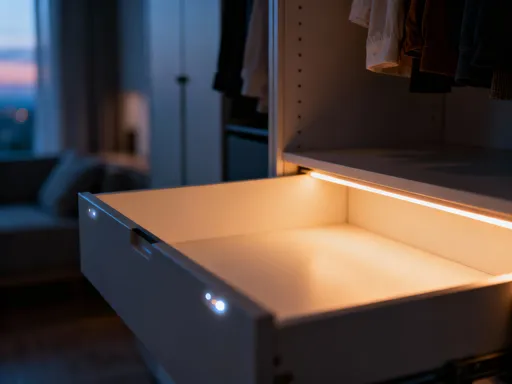
I didn’t overhaul my whole room overnight. I started with one drawer—the one where I kept my sleepwear and bedtime essentials. I installed a motion-sensing LED strip inside, so it lit up the second I opened it. I labeled the drawer with a waterproof tag that linked to my phone. I also added a small wireless charging pad on the nightstand, so I wouldn’t have to hunt for a cord.
The first night, I opened the drawer and—wow. Everything was visible. No digging. No guessing. I put on my pajamas, plugged in my phone, and realized I’d saved time. Not much—maybe 30 seconds. But the next night, it happened again. And the night after that. I started tracking it. Over a week, those 30 seconds added up to about 3.5 minutes. Then I added a second drawer for workout clothes, with a similar setup. Another 20 seconds saved each morning. Another 2.5 minutes.
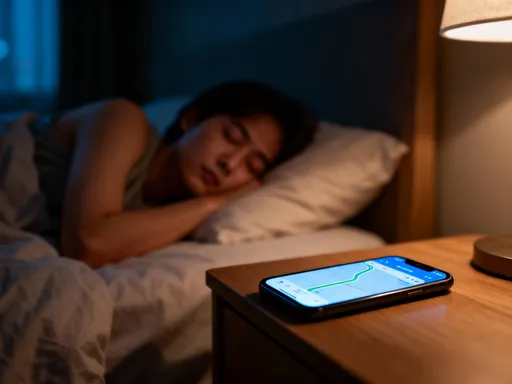
Within two weeks, I’d reclaimed over seven minutes a night. That doesn’t sound like much, but think about it: seven minutes is enough to stretch, to journal one thought, to call your mom and really talk. It’s enough to sit on the edge of the bed and breathe. I started using that time to do a short gratitude reflection—just naming three things I was thankful for that day. Some nights, I read a few pages of a book. Others, I just sat in the quiet. The space wasn’t louder or busier—it was calmer. And those minutes weren’t just saved time. They were reclaimed presence.
Unexpected Social Shifts: When My Bedroom Became a Connection Hub
I never thought my bedroom could become a place for connection. It used to be the last stop of the day—a place to crash. But as it became calmer, more organized, it started to feel more inviting. My partner noticed. “You seem more relaxed at night,” he said. And I was. I wasn’t rushing around, muttering about lost socks. I wasn’t distracted by clutter. I was actually present.
One evening, my sister came over after a tough day. She was stressed, and I invited her to sit on the bed while I changed. The room was softly lit, the drawers closed, the space peaceful. She looked around and said, “This feels so… safe.” We ended up talking for 45 minutes—about her job, her worries, her dreams. It wasn’t planned. But the environment made it possible. There were no distractions. No piles of laundry begging to be folded. No blinking chargers or tangled cords. Just two sisters, side by side, in a quiet room.
That surprised me. I thought smart storage was about efficiency. But it was also about hospitality—toward myself and others. When I stopped fighting my space, I had more emotional bandwidth to show up for the people I loved. The tech didn’t create those moments. But it made space for them. It removed the noise so the real conversations could be heard.
Teaching My Circle: Sharing the System, Not Just the Gadget
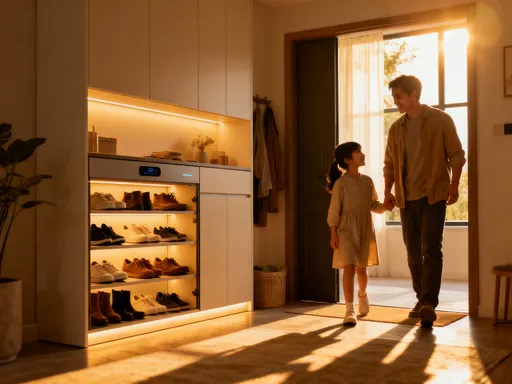
I didn’t go around telling everyone to buy smart drawers. That wouldn’t have helped. Instead, I started sharing what worked—like a friend who’d found a good recipe. At a weekend brunch, one of my closest friends mentioned she was always late in the mornings. “I waste so much time looking for things,” she said. I told her about the voice-tag labels I used. “You can just ask your speaker, ‘Where are my black heels?’ and it tells you,” I said. She laughed, then got curious.
I showed her how easy it was to set up. She didn’t need a full system—just a few smart tags and a free app. She started with her shoe rack. Within a week, she texted me: “I found my boots in 10 seconds. I’m never going back.” Another friend was struggling with nighttime reading. The light from her phone kept her awake. I suggested a motion-sensing booklight inside her nightstand drawer. She tried it, and now she reads 20 minutes a night without disturbing her partner.
What surprised me most was how these small changes sparked conversations. We weren’t just talking about gadgets—we were talking about our lives. About how we wanted to feel at the end of the day. About what we were tired of. And slowly, we started encouraging each other. One friend started a “no clutter zone” challenge. Another began using a simple app to track her nightly routine. It wasn’t about perfection. It was about progress. And it felt good to grow together.
Beyond Convenience: How Order Fueled Personal Growth
I didn’t expect this journey to change me on the inside. But it did. With a smoother, more predictable routine, I started to feel more in control. That sense of calm didn’t stop at my bedroom door. It spilled into other parts of my life. I started journaling—just a few sentences each night. Then I added a five-minute meditation. The consistency wasn’t because I suddenly had more willpower. It was because my environment supported it.
When your space is organized, your mind has room to breathe. You’re not using energy to manage chaos. That mental bandwidth? It goes somewhere. For me, it went toward self-reflection, toward growth. I began setting small goals—like reading one book a month or cooking a new recipe every week. And I met them. Not because I was superhuman, but because I wasn’t fighting my surroundings.
The smart storage system didn’t fix me. It supported me. It gave me the gift of routine, and routine gave me the space to become who I wanted to be. I wasn’t just organizing clothes—I was organizing my life. And with each small win, my confidence grew. I started believing that change was possible, not just in my bedroom, but in every part of my life.
Making It Yours: Simple Steps to Start Without Overhauling Your Life
If you’re thinking, “This sounds great, but I don’t have the budget or time,” I hear you. You don’t need a full smart closet to start. Here’s what I recommend: pick one pain point. One thing that frustrates you every night. Is it finding your sleep mask? Charging your devices? Folding workout clothes?
Start there. Maybe it’s adding a $15 motion-sensor light to your nightstand drawer. Or using a free voice assistant app to label your most-used items. Maybe it’s setting up a charging station with a simple tray and cord organizer. The key is to make it easy. Design for your real life—not a magazine spread.
Focus on one drawer, one corner, one habit. Let it work for you before expanding. And remember: this isn’t about perfection. It’s about progress. It’s about creating a space that helps you breathe, not one that adds pressure. You don’t need to buy everything at once. You just need to begin. And when you do, you might find—like I did—that those tiny changes add up to something big.
Conclusion: More Than Storage—A Quiet Revolution in Everyday Life
What started as a simple upgrade to my bedroom turned into something much deeper. It wasn’t just about finding my pajamas faster. It was about finding myself again. That extra time, that quiet space, those calm moments—they became the foundation for a more intentional life. I’m not saying smart storage will change the world. But it can change your world. It can give you back minutes you didn’t know you’d lost. It can make your home feel more like a home. And it can remind you that small, thoughtful choices matter.
Technology doesn’t have to be loud or complicated to be powerful. Sometimes, it’s the quietest tools that make the biggest difference. A light that turns on when you need it. A label that helps you remember. A drawer that closes softly, without a sound. These aren’t just features. They’re acts of care—for your time, your peace, your relationships.
So if you’re feeling overwhelmed, if your evenings feel chaotic, if you’re craving just a few more moments of calm—start small. Look at one drawer. One corner. One habit. Ask yourself: what would make this easier? And let technology be your helper, not your burden. Because the life you want isn’t on the other side of a major overhaul. It’s in the next quiet moment you give yourself. And that’s worth every second.