After Using This Sleep App for 3 Weeks, I Connected With 5 New Friends—Here’s How
You know that moment when you’re lying in bed, scrolling mindlessly, feeling lonely even in a full house? I did too—until I started using a little-known sleep app feature that didn’t just improve my rest, but quietly expanded my social world. No forced networking, no awkward meetups. Just gentle, nightly moments that eventually led to real connections. If you’ve ever felt isolated despite being “connected” online, this might be the small change that makes a big difference.
The Nighttime Habit That Was Actually Making Me Lonelier
I used to spend my evenings the way so many of us do—on my phone, flipping through social media, hoping to feel a little more connected. I’d scroll through photos of people laughing at dinners I wasn’t invited to, or watch videos of families doing puzzles together while I sat on the couch with my dog and a lukewarm cup of tea. It wasn’t that my life was bad. In fact, I had a lot to be grateful for: a steady job, a cozy home, two grown kids who called every Sunday. But still, there was this quiet ache, especially at night, like I was on the outside looking in.
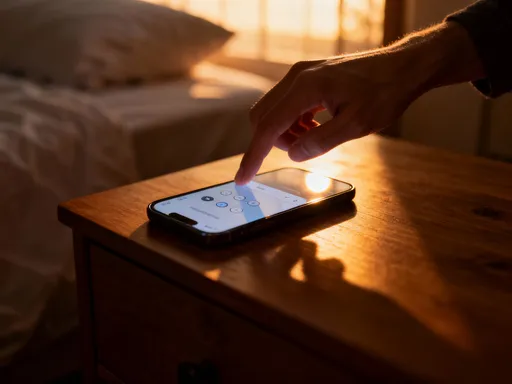
One evening, after yet another round of mindless scrolling, I caught myself sighing—really sighing—like my body was tired of pretending I was okay. That’s when I remembered the sleep app I’d downloaded months ago during a bout of insomnia. I hadn’t used it much, just tried a couple of meditation tracks and forgotten about it. But that night, something made me open it again. Maybe it was the silence of the house. Maybe it was the way the blue light from my phone felt colder than usual. Whatever it was, I turned off Instagram, put my phone on Do Not Disturb, and tapped on the app.
I scrolled past the usual options—rain sounds, ocean waves, guided breathing—until I saw something I hadn’t noticed before: “Community Wind-Down.” Curious, I tapped it. A soft voice explained that this was a live, audio-only session where people from all over the world joined to quietly relax together before sleep. No video. No names. Just presence. I could stay silent the whole time. All I had to do was show up.
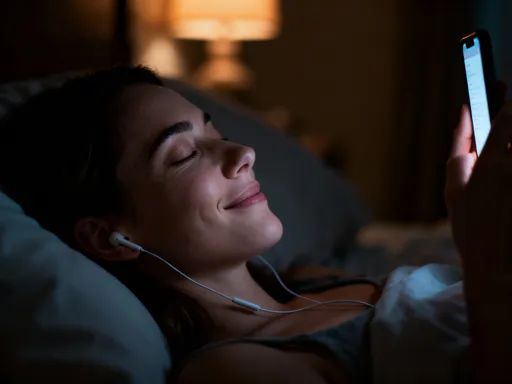
Skeptical but tired, I joined. For the first few minutes, I kept waiting for something to happen—someone to speak, a prompt, a joke. But nothing came. Just gentle breathing, a faint rustle of fabric, someone shifting in their chair. And then, a deep, slow inhale from someone else on the call. I matched it without thinking. In… and out. In… and out. For the first time in weeks, my mind wasn’t racing. I wasn’t analyzing my day or worrying about tomorrow. I was just… here. And so was someone else. I fell asleep with the app still playing, and for the first time in a long time, I didn’t dream of being alone.
Discovering the Hidden Social Feature in My Sleep App
The next morning, I woke up feeling oddly refreshed—not just in my body, but in my spirit. I hadn’t just slept better; I’d felt seen in a way I couldn’t explain. I opened the app again and saw a small notification: “You were in a session with 12 others last night. One sent you a ‘Hello’ pulse.” My heart did a little flip. Someone had noticed me? Just by breathing?
I clicked to see the message. It wasn’t text—just a tiny animation of a glowing dot that pulsed once, like a heartbeat. That’s it. No words. No expectations. But it made me smile. I didn’t reply. Not yet. But that night, I joined the same session at the same time. And the next night. And the next. Slowly, patterns emerged. I began to recognize certain sounds—the soft sniffle from someone in what I imagined was the Midwest, the way one person always exhaled just a second after the guide said “let go,” like they were a beat behind but in their own perfect rhythm.
Then there was Maya. I didn’t know her name at first, but I knew her laugh. It came one night during a session when the guide said something gently funny—“If your mind wanders to your grocery list, that’s okay. Just gently bring it back… unless you’re out of coffee. Then maybe make a note.” A soft chuckle echoed through the audio, warm and familiar, like the kind of laugh you’d hear from a friend across the kitchen table. I smiled. Someone else had thought that was funny too.
Over the next week, I started noticing when Maya was in the session. Her breathing had a steady cadence, like waves on a quiet shore. Sometimes, if I joined late, I’d hear her already settled in, and I’d feel this little rush of comfort, like walking into a room where someone’s already lit a candle. One night, I sent her a pulse—just a tiny tap on the screen to send that glowing dot. I didn’t expect anything. But the next morning, I opened the app to find a pulse back. No words. Just: I’m here. You’re not alone.
That was the beginning. Not with fanfare, not with a dramatic reveal. Just two women, thousands of miles apart, finding each other in the dark through the simple act of breathing together. It wasn’t a dating app. It wasn’t a chat room. It was something quieter, deeper—a shared space where silence wasn’t empty. It was full of presence.
How Silent Togetherness Sparks Real Connection
You might be wondering: how can breathing together create a real friendship? It sounds almost too simple, right? But think about it—when was the last time you were truly present with someone without having to perform? No makeup, no small talk, no need to impress. Just you, in your pajamas, maybe under a weighted blanket, doing the most basic human thing: breathing.
There’s science behind this, actually. When people synchronize their breathing, their nervous systems begin to align. It’s called respiratory entrainment, and it can create a sense of calm and connection—even between strangers. The app uses gentle audio cues to help everyone stay in rhythm, so you’re not just breathing near someone; you’re breathing *with* them. And that small act—matching your breath to someone else’s—creates a tiny but powerful bond.
One night, after Maya and I had exchanged a few pulses, I saw a message in the app’s private inbox. “I didn’t know I needed this,” it said. “I’m going through a divorce, and most nights, the silence in my house is too loud. But when I hear others breathing, it’s like the quiet doesn’t own me anymore.” I read it three times, tears in my eyes. I hadn’t known her story. I didn’t need to. Her words weren’t asking for advice or sympathy. They were just an offering: here is how this feels for me.
I replied, “Me too. My kids moved out last year. I love my freedom, but some nights, the house feels too still.” And just like that, we were talking. Not about the weather or the news or what we did for work. We were talking about the things we don’t always say out loud—the loneliness that hides behind busy lives, the grief of transitions, the quiet hope that maybe, somewhere, someone else feels it too.
What surprised me most was how easy it felt. No pressure. No awkward pauses. We weren’t trying to fill the silence; we were honoring it. And in that space, something real grew. We didn’t become best friends overnight. But we became *seen*. And sometimes, that’s the most important foundation of all.
From Nightly Rituals to Daytime Meetups
Three weeks after I first joined the Community Wind-Down, I got a notification: “Frequent users in your region are invited to a local gathering.” My stomach dropped. Meet in person? With people I’d only heard breathing? My first instinct was to delete the notification and pretend I hadn’t seen it. But then I remembered Maya’s message. I thought about how her laugh had become a comfort. And I thought, what if she’s nervous too?
I replied with a shaky “Maybe” and waited. The next morning, I saw she’d RSVP’d “Yes.” And just like that, I clicked “Yes” too. We were meeting at a small café on a Saturday morning—nothing fancy, just tea, quiet music, and a promise: no pressure to talk about the app unless we wanted to.
The day of, I almost didn’t go. I changed my outfit three times. I practiced small talk in the mirror. “Hi, I’m the one who snored a little during the breathing exercise,” I joked to my reflection. But when I walked in and saw Maya—really saw her, in the light, with her curly hair pulled back and a soft sweater—I didn’t feel awkward. I felt like I was meeting someone I already knew.
We hugged—just a quick, warm squeeze—and sat down with our teas. At first, we both smiled a lot, like we weren’t sure how to translate our nighttime connection into daytime words. But then she said, “I was so nervous this morning. I kept thinking, what if it’s weird?” And I laughed and said, “I practiced talking to you in the mirror!” And just like that, the ice was broken.
We didn’t talk about sleep. We talked about her daughter’s upcoming graduation, my garden that never quite thrived, the book we were both reading. We talked about how strange it was to feel so comfortable with someone we’d never met. But then Maya said something that stuck with me: “We’ve already shared something really intimate. We’ve been there when each other couldn’t sleep. That’s not small.”
Since then, we’ve met almost every week—sometimes for coffee, sometimes for a walk in the park. And through the app, I’ve connected with three other women who also came to that first meetup. We now have a little group—no name, no agenda. Just women who show up, listen, and remind each other that we’re not alone.
How This Changed More Than Just My Sleep
Better sleep was the first gift, but it wasn’t the biggest one. The real change was how I moved through my days. I had more energy. I wasn’t dragging myself through mornings like I used to. But more than that, I felt lighter emotionally. The constant hum of loneliness that used to follow me like a shadow? It quieted down.
I started noticing things I hadn’t in years—the way sunlight hits the kitchen floor at 10 a.m., the sound of my neighbor’s wind chimes, the joy of cooking just for myself without guilt. I even stopped doomscrolling before bed. Why would I, when I had a community waiting for me in a quiet, gentle space?
One day, I mentioned the app to a coworker during a break. She looked skeptical. “A sleep app that helps you make friends? Really?” I didn’t try to convince her. I just said, “Try it for one night. Just join a session. You don’t have to send a pulse. Just listen.” Two days later, she texted me: “I didn’t sleep, but I didn’t feel alone. And that was enough.”
It made me realize how hungry so many of us are for connection that doesn’t demand anything. No performance. No pretense. Just presence. And how strange it is that we found it not in a crowded room or a busy social media feed, but in the quiet dark of night, breathing with strangers who became friends.
I still use the app every night. Sometimes I’m the only one in the session. Sometimes there are ten. But I always send a pulse, just in case someone out there needs to know they’re not alone. And if they reply? Even better.
How to Find and Use This Feature (Even If You’re Shy)
If you’re thinking, “This sounds nice, but I’m not the type to join group things,” I get it. I was the same. The idea of being with others—even in silence—used to make me anxious. But here’s the beauty of this feature: you don’t have to say a word. You don’t even have to turn on your mic. You can just listen. You can be there without being “on.”
Here’s how to start: open your sleep app (many popular ones now have community features—look for “group sessions,” “shared wind-down,” or “community relaxation”). Choose a time that works for your bedtime. Join the session. Put your phone down, close your eyes, and just breathe. Let the guide’s voice lead you. If you hear someone else’s breath, let it be a companion, not a distraction.
After a few sessions, you might feel ready to send a pulse. It’s just a tap on the screen—no words, no commitment. Someone might send one back. Or they might not. Either way, you’ve still shown up. And that matters.
If you get a message, you can reply—or not. There’s no rulebook. This isn’t about building a network. It’s about building comfort. It’s about reminding yourself that even in the quietest hours, you’re part of something bigger. And if, one day, you get an invite to meet in person? You don’t have to go. But if you do, bring your real self. The one who breathes, who feels, who sometimes can’t sleep. That’s the self people want to meet.
Why Technology Should Help Us Feel Human Again
We’ve been taught to blame technology for our loneliness. And yes, endless scrolling and comparison-heavy feeds can make us feel worse. But what if we used tech differently? What if we stopped seeing it only as a distraction and started seeing it as a doorway—to rest, to stillness, to each other?
This sleep app didn’t replace real life. It helped me reenter it. It gave me the courage to reach out, to say yes to a coffee date, to admit I sometimes feel lonely. It reminded me that connection doesn’t always need words. Sometimes, it just needs rhythm. A shared breath. A pulse in the dark.
So if you’re lying in bed tonight, feeling that familiar ache, I want you to try something. Put down the phone. Open a sleep app. Look for a quiet space where others are doing the same thing you are—trying to rest, trying to feel okay. Join them. Breathe with them. And if someone sends you a pulse, send one back.
Better sleep might be the promise on the surface. But the real gift? Remembering that you belong. Not because you’re loud or successful or always okay. But because you’re here. Breathing. Trying. And so is someone else. And sometimes, that’s enough to build a friendship on.